Let’s be honest: waiting is not an innate skill for most children. It is something that has to be cultivated with a lot of effort as they grow. When waiting also comes with a higher level of anxiety, caused by something new, like flying for the first time, it can be truly challenging. And in an airport, waiting comes in many forms: waiting in lines, waiting without a line, waiting while sitting, waiting while standing, waiting while needing to pee (and a line always seems to trigger the strongest need!). During all those waits, you often cannot line up all the toy cars to play traffic, or spread out every block to build something. So what can you do to entertain a small child in an airport?
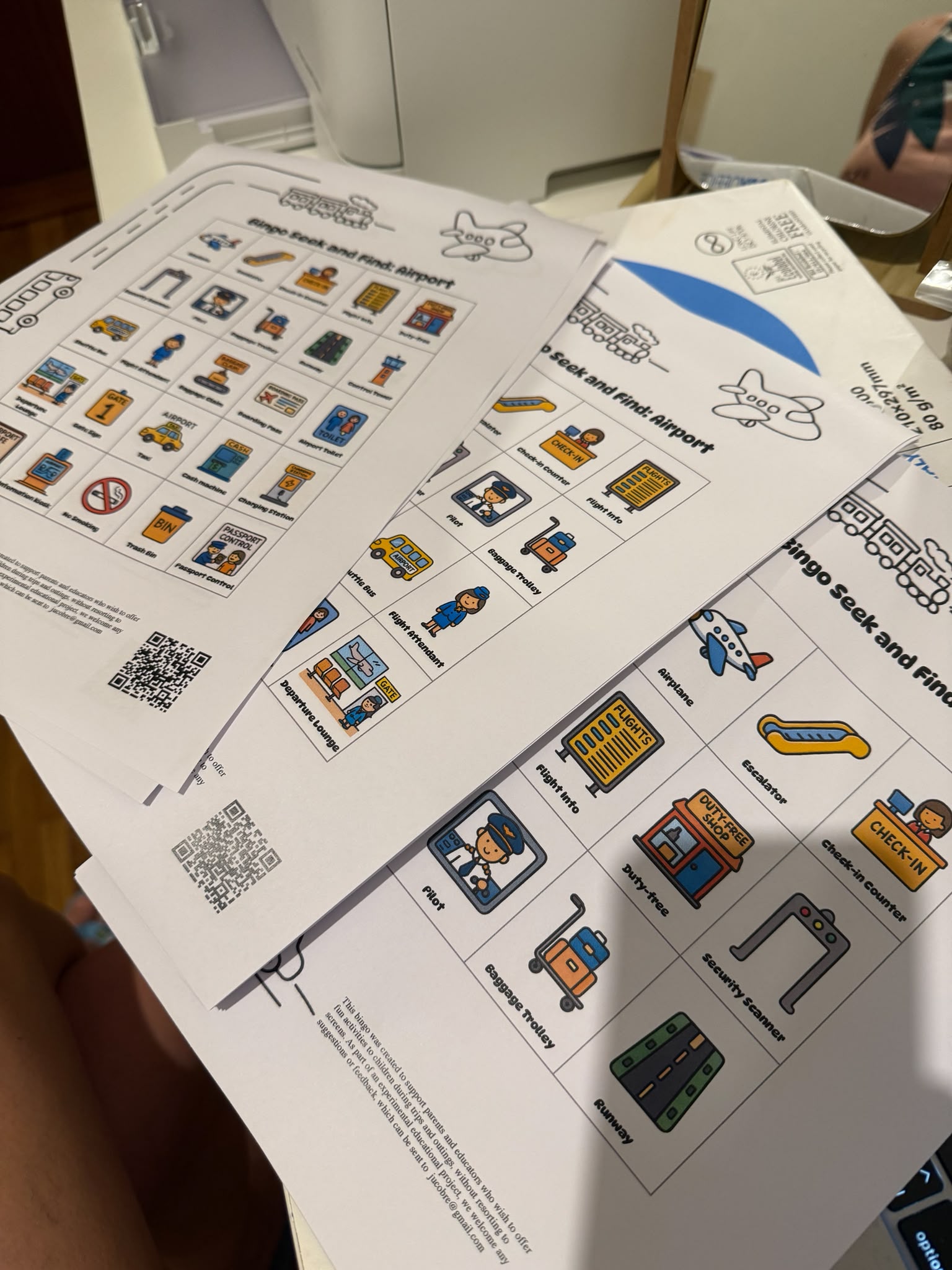
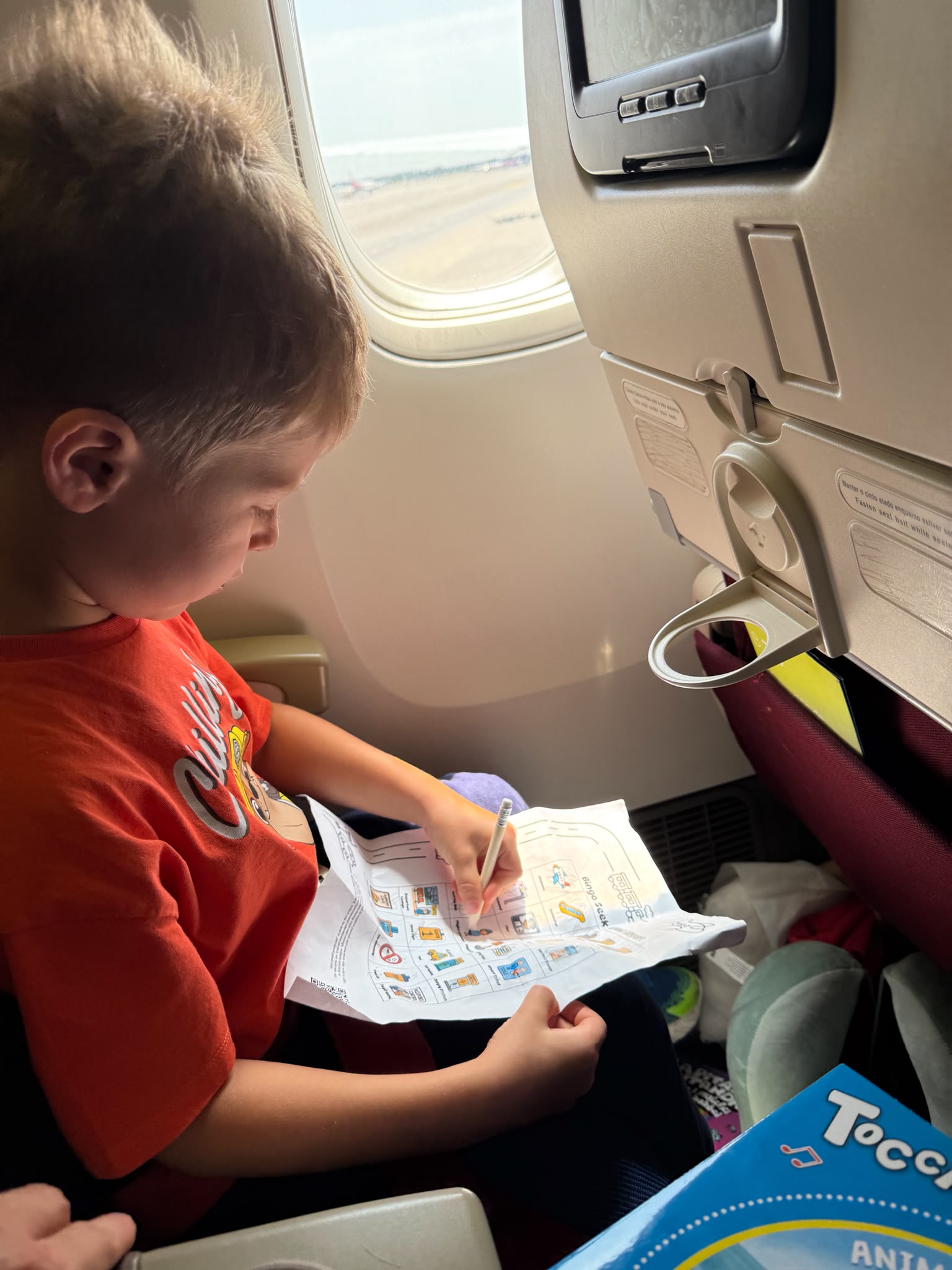
Turn the airport into a game: a place of fantastic discoveries, close observation, learning, and, even more, a beautiful connection with your children. That was what I had in mind when I created the airport bingo for Santiago to play on his second airplane trip, the first one he would actually remember because of his age, 4 and a half. One sheet of paper with 25 drawings and a pencil to mark what he had seen. I can say it is something simple and profound.
As soon as we arrived at the airport, we went to check in and drop off the bags. I was alone with the children, two carry-ons, two checked bags, two little backpacks, 14-month-old Franco, and Santiago. Once we were left with only the carry-ons and backpacks, we could take out the Bingo Seek and Find sheet and a pencil. I had already explained check-in and had the boarding passes in my hands. I asked him to find them on the sheet, and he did, marking the first two items.
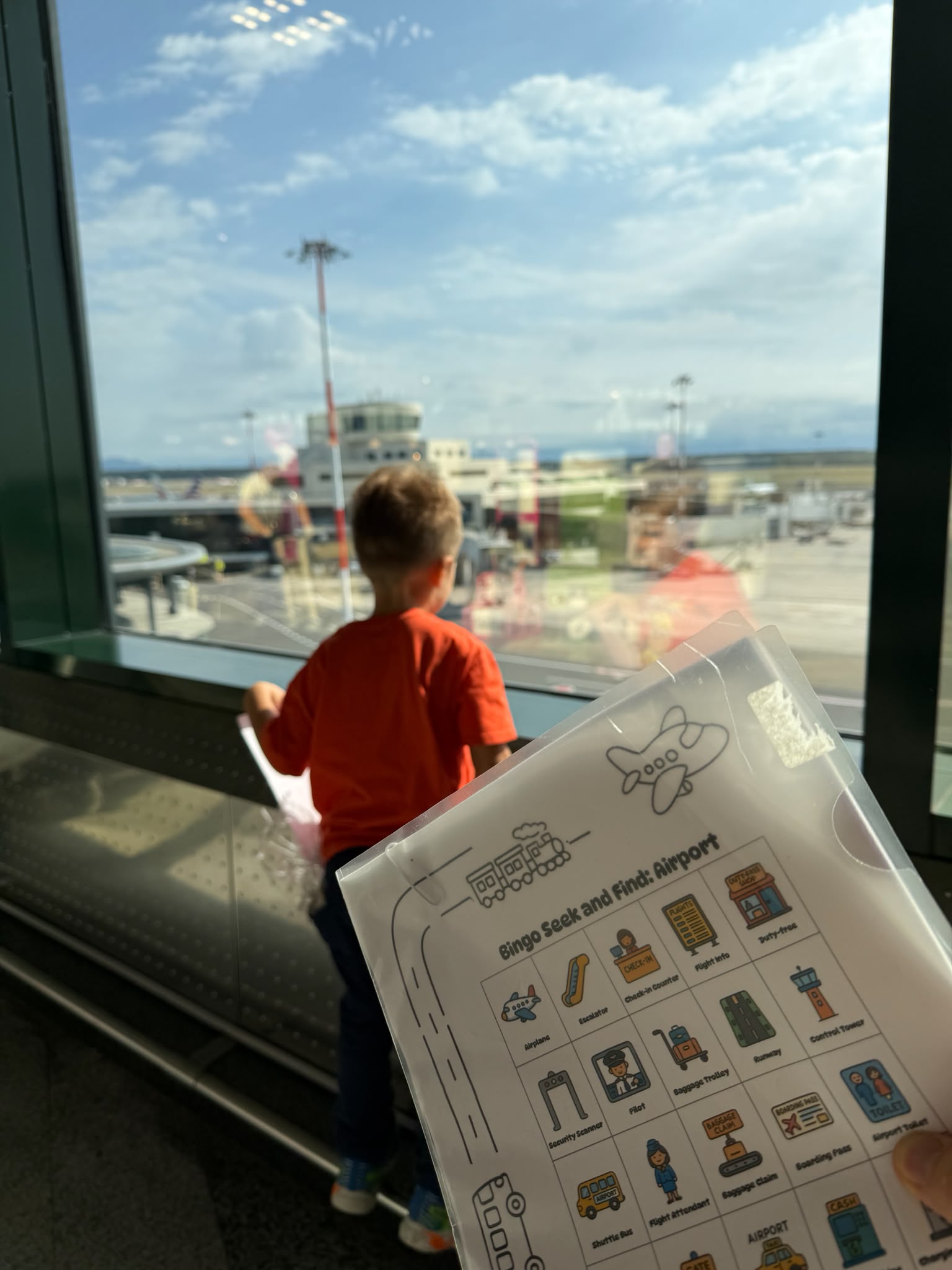
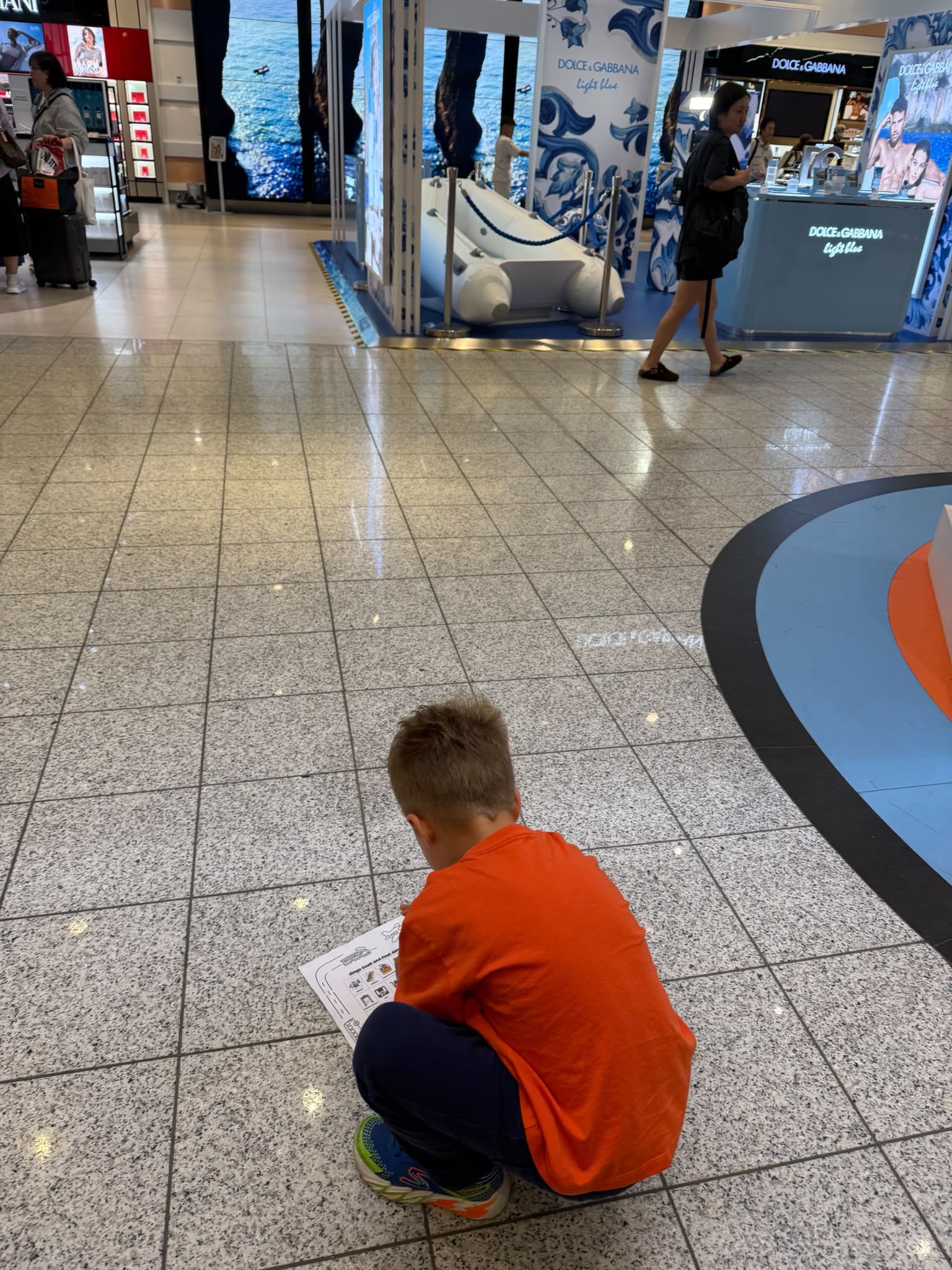
Then we went looking for the way to the departure area, and I spotted the control tower. Santiago looked through the large corridor window and also saw an airplane, which means he noticed that item on his own. With the sheet resting right on the floor, he marked the things he had just seen. We continued like that, item by item, with lots of conversation and lots of curiosity being satisfied. Especially when Franco did not want to stay in the sling, we put the game away, but kept observing and commenting. I also explained everything to Franco, because I believe that just as a child can learn a new language without formal study, a child can also store a lot of information for the future.
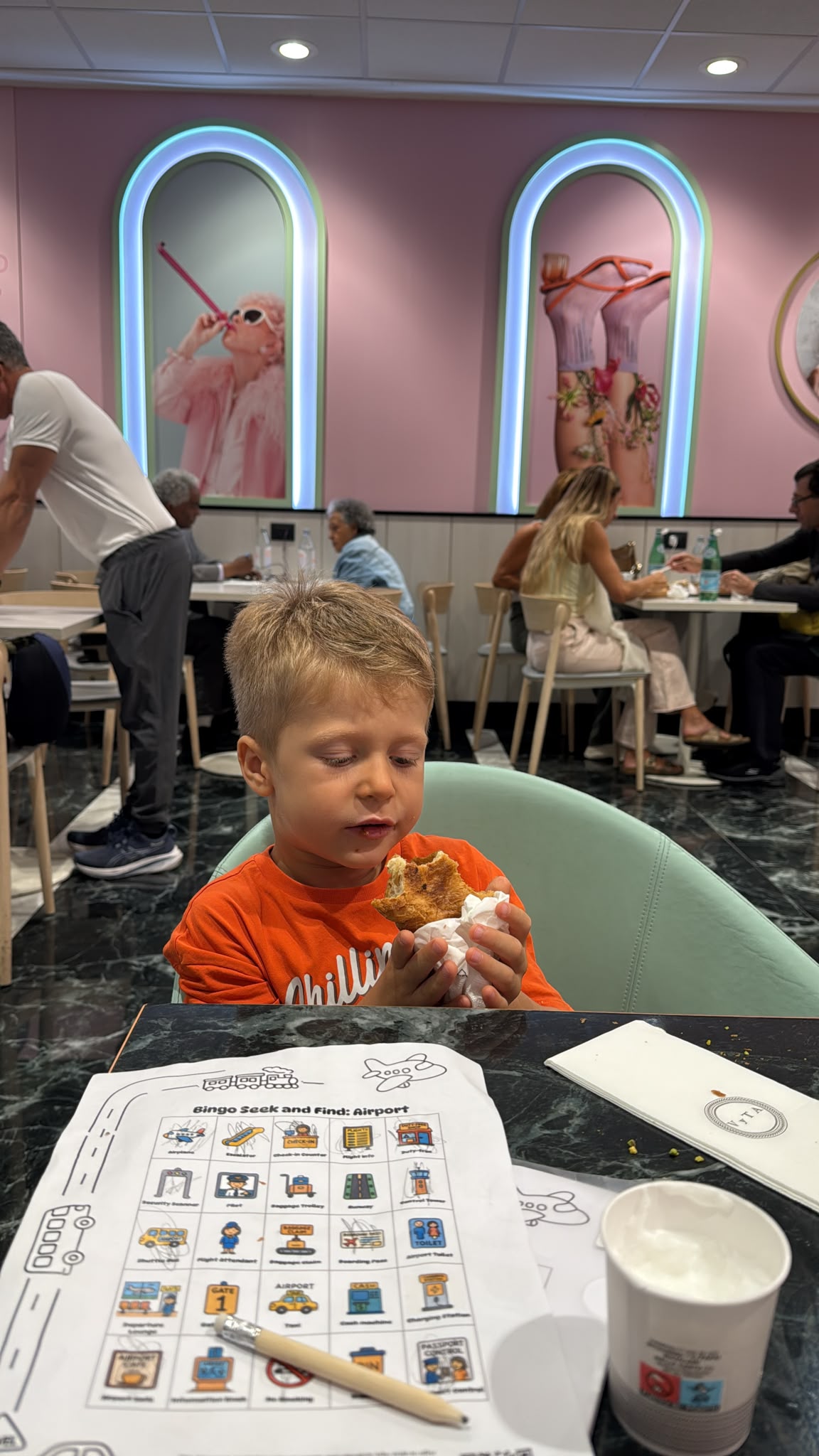
One of our activities during the flight was to take out the game sheet and check whether there was any item we had seen but had not marked. “Did we see an escalator?” I asked. Santiago thought for a moment, made the face of someone remembering something very precious, and answered: “Yes, after we got off the train, Mommy.” In that moment I realized he was not just marking drawings. He was recording details of the trip that I myself had already forgotten.
Something funny happened when we arrived at Duty Free. He asked what it was, I explained, and asked him to mark it on the sheet. He said it was not there. I insisted, and he also insisted that it was not, until I pointed to the item. “This little stand? Yes, it sells products,” he said, and marked the item as seen.
The most exciting moment was going through the scanner. And I confess it was also the most demanding one for me: putting everything on the belts, leaving out what needed to be visible, documents, phone, taking care of Franco, answering all of Santi’s questions, and making sure we did not leave anything behind.
Something amusing for me was his surprise at the flight crews’ uniforms. He would pull me, say “look, Mommy,” and ask every time who those people were. Maybe he was so surprised because he was not used to seeing so many people together dressed so elegantly.
Each element had been chosen with learning in mind, so that I could explain how the things we had to pass through worked before we finally boarded the plane. The game ended up going beyond what I had imagined. Little by little, I noticed he was doing something interesting: sometimes he observed something around him and looked for the matching drawing. Other times, he found the drawing first and started searching for that element in the airport. We also worked on frustration, because not every item could be observed. And what if the control tower could not be seen? That was okay!
That day I realized the airport did not have to be only a place of waiting. It could also be a place of discovery. And perhaps that was the true origin of Fun Trip for Kids: turning moments of waiting into opportunities to observe, learn, and create memories together.